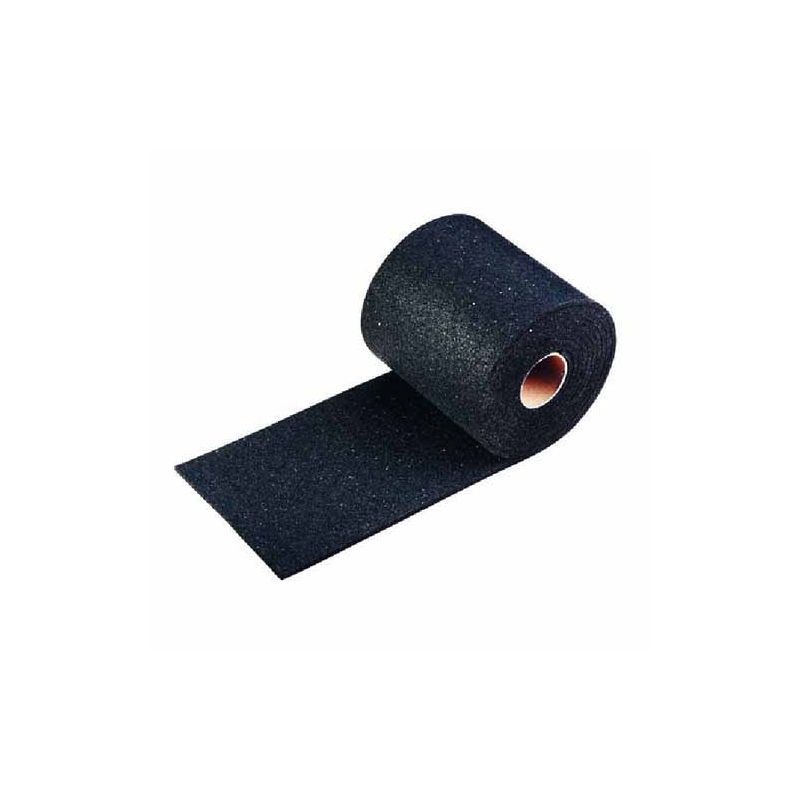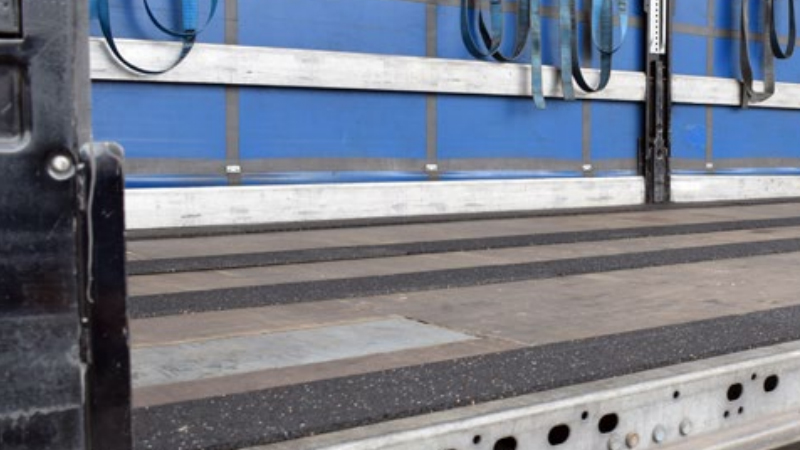
Forankra anti-slip matting has been developed to cover a wide range of safety requirements . The mats were designed with a coefficient of kinetic friction of 0.6μ.
A selection of materials in different thicknesses offer very good friction values on the load-bearing surface ranging from 125 to 200 t/m², allowing excellent adaptation to your load securing needs.
All anti-slip mats can be reused multiple times until they reach a state of wear and need to be replaced.
DIMENSIONS
| Formats | Length x Width on request |
| Thicknesses | From 4 to 20 mm |
| Max. Load Admissible Load on the surface (max.30% compression according to VDI 2700 sheet 15) |
Ca. 125 t/m² in 3, 4 mm thickness
Ca. 170 t/m² in 5, 6 mm thickness Ca. 200 t/m² in 8, 10 mm thickness |
| Coefficient of kinetic friction μ | 0.6* In 3, 4, 5, 6, 8, 8, 10 mm thicknesses |
Other thicknesses, technical characteristics and friction coefficients are available (Min. 0.81* for thicknesses of 3, 4, 5, 6, 8, 10, 12, 15, 18, 20 mm).
Ask for information to our technical department.
Avoidance of
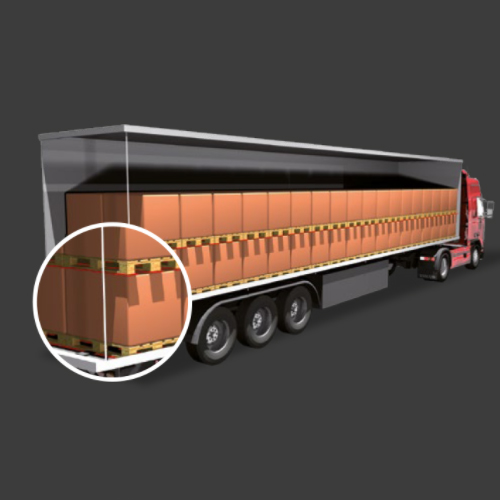 PALLETS AND CRATES
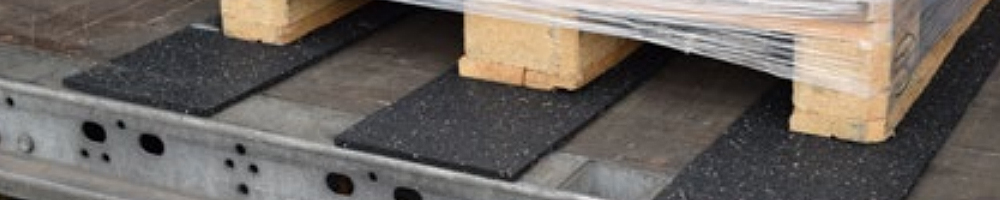
The use of anti-slip mats under the pallet or box substantially increases the friction between the load and the platform surface. This means that the number of lashing belts required can be reduced.
PALLETS AND CRATES
The use of anti-slip mats under the pallet or box substantially increases the friction between the load and the platform surface. This means that the number of lashing belts required can be reduced.
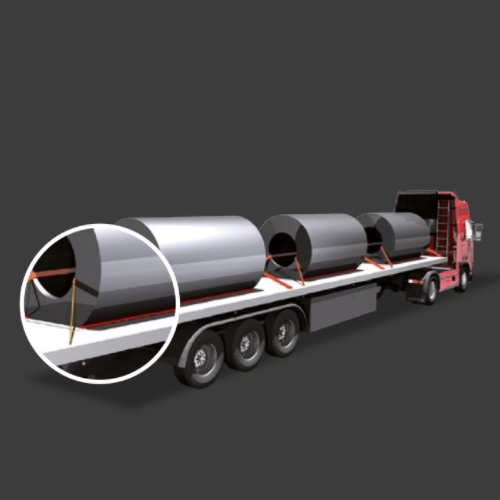 METAL COILS are ideal for the transport of metal coils. They prevent dangerous slipping and subsequent displacement of the center of mass, anti-slip mats should be placed between the coils and the floor.
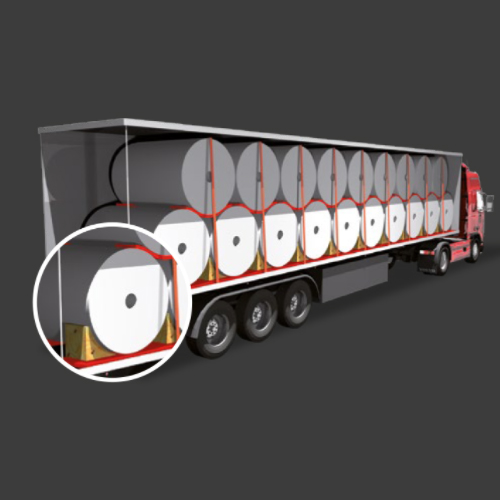 PAPER REELS | The flexible, robust and resilient Forankra anti-slip mats secure heavy loads such as transversely loaded paper reels on smooth loading surfaces in transport vehicles against lateral slipping. Placed under and between the paper rolls, the anti-slip mats support and balance the rolls. They also significantly reduce the number of tie-down belts required for securing.
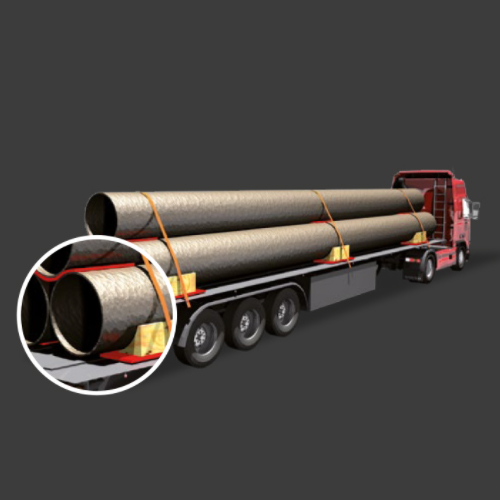 PIPELINES | If the pipes are loaded longitudinally in the semi-trailer, it is especially important to avoid slipping both laterally and longitudinally. The use of anti-slip mats under the wedges and between the pipes provides the necessary protection in both directions.
Cargo securing liability - The Legal Situation
According to the Reglamento General de Circulación (Real Decreto) both the driver and the loader are responsible for the safety of the load.
- The loader, the transport company and the driver are obliged to stow the load safely to avoid damage to third parties.
- Any vehicle used to transport goods must be equipped with securing and stowage systems in accordance with the UNE EN 12195 standard.
According to the Contract of Carriage of Goods by Road, the shipper and the consignee are liable.
- The shipper and the consignee shall bear the consequences of any damage resulting from the operations they are responsible for.
- However, the carrier shall be liable for damages suffered by the goods due to improper stowage when such operation has been carried out according to its instructions.
Since 1991, the VDI 2700 Directive regulates when a cargo is to be considered properly secured and when cargo stowage has been insufficient.